

Alexander Shulgin, also known as Sasha Shulgin, is one of the most fascinating chemists and countercultural figures of our time. Shulgin is most well known for popularizing MDMA, but he spent his whole life synthesizing numerous new psychoactive compounds and diligently documenting their effects. Through his expertise in chemistry, Shulgin nurtured his interest in psychedelics, experimenting with countless substances from psilocybe cubensis mushrooms and mescaline, to lesser known substances that are still not well understood. Just as Maria Sabina introduced magic mushrooms to the Western world, Shulgin introduced psychoactive compounds to the public, opening Pandora’s box as it were, of new substances and their broader societal effects.
Shulgin’s expertise took him around the country, from courtrooms and lecture halls, to countercultural festivals, but his main achievements took place in his own home laboratory in the San Francisco Bay area. Like other notable psychedelic thinkers such as Terrence McKenna, his theories about psychedelics engaged with profound questions about the evolution of consciousness and humanity. His work and extensive writings naturally intersect with disciplines like psychology and criminology, especially in his later years when he faced legal issues for his work. Still, his principal interest was in the structural and experiential differences of compounds that can produce psychedelic effects. It was this innate, prodigal inspiration that drove Shulgin to continue synthesizing and exploring these substances despite all obstacles.
Alexander Shulgin’s Early Life and Influences
Alexander Theodore Shulgin was born in 1925 in the San Francisco Bay Area to Russian immigrant parents. He was a gifted child, and enrolled in Harvard’s organic chemistry program at just sixteen. He ended up dropping out of college to serve in the armed forces during World War 2, but returned to higher education for a PhD in biochemistry at UC Berkeley.
Shulgin’s Career in the Private Sector
 After completing his PhD, Shulgin studied psychiatry and pharmacology before beginning traditional employment as a chemist. His day job never stopped him from pursuing his natural inclination toward psychopharmacology.
He first worked as a laboratory research director before taking a job at Dow Chemical Company inventing patented chemicals. His most notable achievement at Dow was the invention of Zectran, a highly profitable pesticide. After that milestone, Dow granted him significant liberties, allowing him to experiment with pharmaceuticals and psychoactives . Gradually though, Dow’s board of directors grew wary of close association with Shulgin’s research on psychoactives, sensing legal and reputational risks.
Alexander Shulgin’s Pivot to independent chemistry research
In 1966, Shulgin left Dow Chemical to pursue independent research full time. He studied neurology for two years at UC San Francisco, then began working in his own laboratory at home. Though he maintained working relationships with universities and government agencies like the DEA, he needed more freedom. Emancipated from the restraints of formal employment, Shulgin worked tirelessly to synthesize new compounds, in the hopes that they could be helpful or even life changing to people. He then studied the effects of these new compounds through the lens of his chemistry background.
Shulgin’s Group Experiments
While Shulgin was a brilliant chemist, the community he built helped him succeed. Shulgin worked with a close-knit group of friends, including his wife Ann, to test the substances he synthesized. He started by taking a minute dose of a new substance himself, and gradually increasing this dose until he noticed an effect. Then, he provided a comparable dose to Ann to see if she could recognize it too. Then his research group of eight to ten people would take the substance to observe its effects.
The Shulgin Rating Scale
Shulgin developed a ‘quantitative potency rating scale’ to help subjects report their experiences on a given substance at a precise dose. This rating scale used a system of plus and minus signs to indicate the intensity of drug effects. The scale ranged from a single minus sign (-) indicating no effects, all the way up to four plus signs (++++), indicating a transcendental, divine state. This system supplemented qualitative data about the perceptual and emotional changes noted by subjects, providing a shorthand which allowed Shulgin to document and compare experiences.
Shulgin: The Godfather of MDMA
Throughout his career as a chemist, Alexander Shulgin synthesized countless unique psychoactive compounds, but he is most well known for his association with 3,4-Methylenedioxymethamphetamine, colloquially known as MDMA or ecstasy. While Shulgin didn’t synthesize or invent MDMA himself, he’s known for revitalizing the cultural interest in MDMA through extensive personal experiments.
The History of MDMA
 Unlike many psychoactives, like mushrooms which grow in nature from mushroom spores, MDMA can only be produced in a lab. MDMA was originally synthesized by German chemist Anton Köllisch, with Merck pharmaceutical company. Köllisch was trying to produce a drug to prevent excessive bleeding, and synthesized MDMA as a precursor in that process.
After that initial discovery, sparse studies documented MDMA’s pharmacological properties. Legends abound suggesting unconventional uses and mishaps with MDMA during this time period. One unconfirmed report suggests that MDMA was used on the battlefield during World War I, but its empathogenic effects disrupted the cadence of battle until soldiers on both sides laid down their guns to play a friendly football game.It has also been rumored that MDMA was intended as a treatment for obesity due to potential appetite suppressant effects, but this has been discredited.
After World War II, the allied forces seized about 70,000 German drug patents, including MDMA. Between the 1940s and the 1960s, US intelligence agencies studied the effects of MDMA, along with other substances like mescaline derivatives, for their potential as “truth drugs.” These research projects took place in the context of similar initiatives such as MKULTRA, which studied LSD.
In 1957, MDMA was added to US intelligence lists of potential chemical warfare tools for brainwashing. The results of these research projects still aren’t well understood, but most scholars maintain that US intelligence found nothing of interest with MDMA, at least as a “truth drug,” and dropped it as a project.
Shulgin’s Introduction to MDMA

The study of MDMA in niche academic or intelligence research didn’t immediately translate to popular understanding or recreational use. It wasn’t until the late 60’s that MDMA emerged as a recreational drug. By the mid 70’s, Shulgin began hearing about this mysterious substance from students and colleagues, and he successfully synthesized it himself in 1976.
Shulgin, along with colleague David Nichols published a report on MDMA’s psychoactive properties in 1978, contending that it could be a beneficial therapeutic tool. Psychotherapists praised its ability to help patients let their guard down, inducing a primordial state of openness, communication, and empathy. In fact, MDMA was nicknamed “empathy” during this time.
By the early 80’s, MDMA spread as a recreational substance, marketed as a party drug for dancing at nightclubs and going out. Though it wasn’t controlled at the time, local police forces and the DEA caught wind of its powerful therapeutic and recreational use, and began cracking down. The DEA announced an emergency schedule 1 classification for MDMA in 1985.
Legality of MDMA
Since 1985, MDMA has sat as a Schedule 1 drug. Despite its relatively low potential for risk and addiction, the United States has considered MDMA too dangerous to make it legal in any context, despite its potential as a therapeutic and recreational drug. In recent years though, MDMA’s capacity to promote empathy has made it one of the main candidates for psychedelic therapy, opening up wider conversations about psychedelic legalization in general.

A Psilocybe cubensis mushroom found in the wild
It seems easier to argue with people about the merits of natural substances rather than synthetic ones. Political movements for legalizing drugs sometimes center the rescheduling of substances that grow in nature. Whether a psychoactive could grow intentionally from a seed, or mushroom spore syringe, the fact that it can grow in nature serves as an argument for its decriminalization. It’s easy to get people on board with these movements when we see such disproportionate scheduling and punishment for drugs that are natural, common and frankly not that harmful.
The movement for decriminalization can run into ideological barriers when it comes to synthetic substances. While this line of reasoning makes sense and reduces harm, it offers no protection for synthetic substances, regardless of their unique risks and benefits, such as the therapeutic potential of a substance like MDMA. Sometimes this line of reasoning can even seep into naturalistic fallacy, which conflates the natural with the good, and the unnatural with the bad. The reality is that whether a drug is naturally derived or synthetic can’t tell you about its risk profile or moral value. As a chemist, Shulgin advocated for psychedelic decriminalization, including synthetic substances like MDMA, and instead advocated a model of informed choice, for drug use.
Shulgin and the DEA
While most people can’t get away with synthesizing psychoactives in an at-home laboratory, Shulgin’s case was exceptional. Talented chemist that he was, the DEA decided that it would be better to have him on their side, and use this relationship to their advantage. Thus, the DEA provided him with a special license, allowing him to possess Schedule 1 substances for his research. In exchange, he provided invaluable information to the DEA, such as seminars, drug samples, and reference material for officers. He also served as a consultant and expert witness in court.
PiHKAL: A Chemical Love Story
For Alexander Shulgin, books were a way to spread the word about his experiments, and the therapeutic potential of the compounds he investigated. Even though this mission was always at the forefront of his work, the DEA wasn’t really concerned about it until the publication of his second book, PiHKAL (Phenethylamines I Have Known and Loved): A Chemical Love Story (1990).
Impressively, the self-published volume sold 21,000 copies. The Shulgin’s themselves even handed out copies; their goal was to make the book’s information widely available, even at a personal loss.
PIHKAL is a truly unique work, spanning multiple complex emotional, political, and technical themes. Shulgin’s creative, sometimes evasive techniques for documenting his life and chemistry research give the book its structure. It is first a romantic memoir, telling the love story of a fictional couple, Shura and Alice, then a recipe book with detailed instructions for synthesizing and using different psychoactive compounds.Most readers understand Shura and Alice’s love story to be a retelling of Sasha and Ann’s own romance, but by writing from the perspective of fictional characters, the illegal actions described in the book can be interpreted as fictional events rather than confessions from the author.
Although the book furnished these descriptions under the guise of a fictional love story, that deniability still wasn’t enough to exonerate Shulgin completely, and his relationship with the DEA took a turn for the worse. In 1994, the DEA showed up at Shulgin’s property and revoked his DEA license, claiming he was manufacturing drugs with the intent to sell them.
Life after PiHKAL
Shulgin was entering his seventies when legal troubles started to escalate. His next book, TiHKAL (Tryptamines I Have Known and Loved,): The Continuation, published in 1997, describes the legal issues they faced in the aftermath of their scuffle with the DEA in great detail. PiHKAL sparked discourse about the limits of the First Amendment, which includes freedom of speech and freedom of press. Courts ultimately ruled that the publishing and ownership of PiHKAL couldn’t be punished due to the rights granted by the First Amendment.
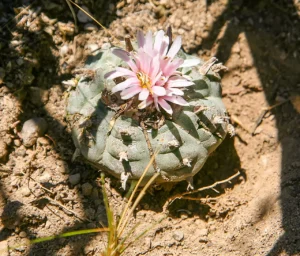
Alexander and Ann continued to do their work, despite ongoing legal debates and health issues as Shulgin entered his later years. He conducted research on mescaline, a compound found in various species of cactus, and published The Simple Plant Isoquinolines in 2002, and later, The Shulgin Index in 2011.
Leading up to his death, Shulgin remained a highly influential cultural figure. He gained a cult following for his books, and retained large audiences through events such as his lecture series at Burning Man. Shulgin died peacefully in his home in 2014.
Remembering Shulgin’s legacy
Alexander Shulgin is remembered for popularizing MDMA, but ecstasy is just the tip of the iceberg. Throughout his career, he synthesized hundreds of novel compounds, and his eloquent writings on the subject have changed the landscape of psychopharmacology forever.
Shulgin’s legacy is not just that of a brilliant inventor and chemist, but also as an advocate for societal change. His deep knowledge about the science behind psychoactives reinforced his powerful indictment of our current legal system. He criticized punitive, moralizing treatment of psychoactives in recent decades, stating “our generation is the first, ever, to have made the search for self-awareness a crime, if it is done with the use of plants or chemical compounds as the means of opening the psychic doors.”
Shulgin is one of the most important figures in the history of psychopharmacology, and through this, he’s deeply impacted counterculture, and the whole world more than we can measure.