
Carlos Castaneda is one of the most notable figures in the late 60’s New Age countercultural movement. He began his career as a young anthropologist studying shamanic traditions with Peyote, Datura, and magic mushrooms, and died as a controversial figure. He’s sometimes even called a cult leader, con artist, and fraud.
Few writers from this period saw such a drastic fall from grace. Castaneda’s seminal work, The Teachings of Don Juan, was basically required reading for those involved in 60’s and 70’s counterculture. From 1971 to 1982, Castaneda was a bestselling author. After criticisms of his work mounted in the mid 70’s Castaneda disappeared from public life, spending time with only a small group of devoted followers who subscribed to his questionable abuse of authority. While parts of his legacy are indefensible, his life and impact are still worth exploring. In this article, we’ll unpack the complicated story of Carlos Castaneda’s books, his work as an anthropologist, and the religious cult that blossomed from his dubious research.
Carlos Castaneda’s Early Life and Education
Castaneda was born in Peru in December 1925. Details of Castaneda’s early life are hard to trace because he wasn’t always straightforward about his background. At times, he told friends and colleagues far-fetched stories about his uncle being an eminent Brazilian diplomat, or attending prestigious private schools. It’s now widely recognized that he was born to a poor family, and was sent away to live with extended family on a chicken farm in Brazil . While he told colleagues that he attended art school in Milan, he had actually studied painting and sculpture in Lima, Peru. There, he fathered a child, but abandoned this responsibility and moved to the United States. Castaneda pursued an associate’s degree at Los Angeles Community College, and enrolled at UCLA in 1959. It’s possible that once he had landed in an elite atmosphere like UCLA, surrounded by students from wealthy and prestigious backgrounds, Castaneda felt compelled to alter some of his biographical details to fit in. At the same time, this pattern of bending the truth would follow Castaneda throughout his life.
As a graduate student at UCLA, Castaneda shifted his focus from art, to anthropology, but struggled to find a thesis topic. Inspiration struck when he met Don Juan at a bus station. Though they didn’t connect through any shared culture or beliefs, Don Juan took Castaneda as an apprentice. Under Don Juan’s tutelage, he followed a strict curriculum, ingesting psychedelic substances towards the goal of becoming a “man of knowledge”. Between 1960 and 1965, he wrote his first book, The Teachings of Don Juan as his thesis for his program at UCLA, which kickstarted his entire career.
Carlos Castaneda’s Books and Rise to Prominence
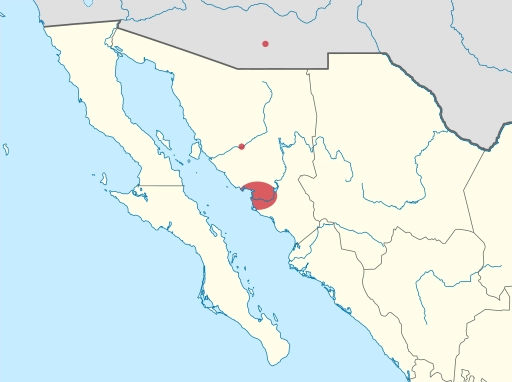
After Castaneda completed his thesis, UCLA published it in 1968. Castaneda’s ethnography purportedly describes the medico-religious practices of The Yaqui, a group indigenous to Northern Mexico. Under the tutelage of a Yaqui shaman and ‘wise man’ named Don Juan, his only interlocutor, Castaneda ingests plant medicines and psychoactives. A compilation of Castaneda’s field notes from these experiences comprises the first ¾ of the book, followed by a brief ‘structural analysis’ which systematizes his findings about his interlocutor’s belief system and teaching method. He weaves a narrative about these experiences, wherein he interacts with deities, learns spiritual truths, and embarks on becoming a wise man himself. It’s a sort of coming-of-age story, so full of novelty and wisdom that it’s hard to put down.
A Storyteller of the 1960’s and early 70’s
The Teachings of Don Juan was first considered an academic publication, but it had a lot of mass appeal. The work unveiled an otherworldly universe; it was profound, wise, and revealed a new way of thinking about life. In those early years after publication, features in The New York Times, Life Magazine, and the Guardian extolled Castaneda’s work. Castaneda went on to write several more books, including A Separate Reality: Further Conversations with Don Juan, and Journey to Ixtlan: The Lessons of Don Juan, which he also published while still in grad school at UCLA. These books provide further reflections of Castaneda’s time with Don Juan, and explore the significance of Don Juan’s teachings for personal transformation and consciousness.
Castaneda’s Later Work
Castaneda wrote prolifically after finishing his degree at UCLA. Tales of Power (1974), details a sorcerer’s quest as a visionary, seeking spiritual knowledge. The Power of Silence: Further Lessons of Don Juan (1987), expands on his stories of profound desert visions.The Art of Dreaming (1993) systematizes the alternate worlds existing within our own consciousness which are accessible through dreams. Magical Passes (1997) laid the foundation for tensegrity, a unique exercise routine that gained more traction for Castaneda in his later years. In Castaneda’s final book, The Active Side of Infinity (1998), he explores his own mortality, presenting a more autobiographical perspective than readers had seen from him before.
Carlos Castaneda’s books on shamanic visions, Datura, Peyote, and magic mushrooms became a crucial voice for a generation fixated on psychoactives and alternative ways of knowing In 1973, Time Magazine dubbed Castaneda “The Godfather of the New Age” marking him as a countercultural, spiritual figure. We’ll discuss all the nuances of his work’s reception later, but for those interested in psychedelics and spirituality, his work remains incredibly important, and The Teachings of Don Juan remains a veritable cult-classic.
Themes in Castaneda’s Work as an Anthropologist
When Castaneda’s first and most famous work was first published, it was generally well-received, but provoked a few nascent criticisms from the academic community, which became more damning over time. Today’s verdict is that his books do not hold up as works of anthropology, and should actually be treated as works of fiction. Although his reputation as an anthropologist took a turn, the popular reception of his books didn’t waiver the same way, and his writing remains popular to this day. Before exploring Castaneda’s downfall as an academic, let us briefly consider the merits of his anthropological work.
The Ethnographic Description
Castaneda’s books paint a vivid picture of his teaching relationship with Don Juan as well as the rituals and lessons Don Juan impressed upon him. Castaneda provided a thorough account of certain rituals and interpretations as dictated by the legendary Don Juan.
This method of detailed storytelling employs the style of “thick description” or subjective and contextualized explanations for behaviors that go beyond a simple narrative. Thick description emphasizes the symbolic potential of each object or action, understanding minute details to be potentially important to the culture being described.
Studying Peyote, Datura, and Magic Mushrooms
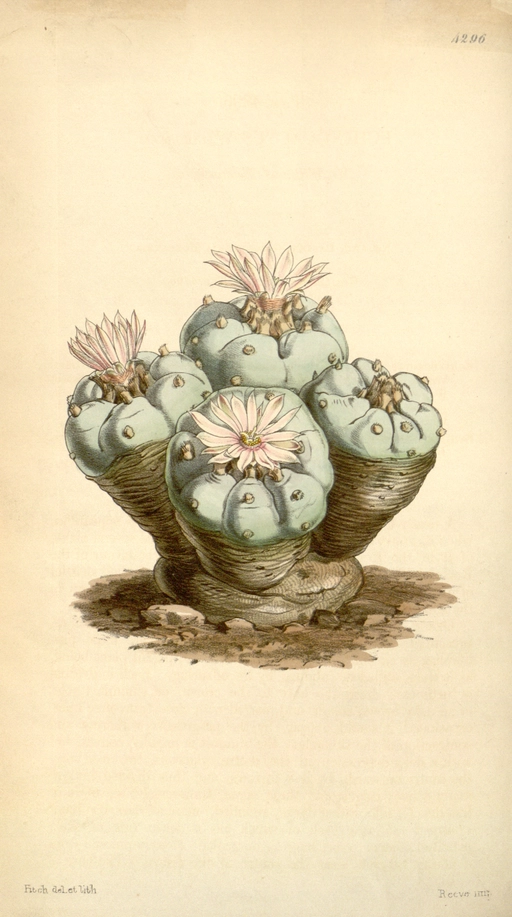
It’s rumored that Castaneda struggled to find a thesis topic, but knew he wanted to write about the cultural practices and histories of plants. Eventually he met his teacher, Don Juan, and settled on studying Yaqui shamanism, focusing on the use of psychoactives like Peyote, Datura, and Magic Mushrooms in Yaqui medico-religious practices. While people can now use technology like spore syringes to cultivate mushrooms for ceremonial use, back in those days, psychoactives had to be harvested and foraged in the wild. Castaneda wasn’t the first to study the use of psychoactive substances like Peyote. In fact, one of the first and most notable works of ethnobotany explores the use of the very same substance among Plains Indians. The 1938 article “The Appeal of Peyote (Lophophora Williamsii) as a Medicine” by Richard Evans-Schultes, published in The American Anthropologist, studies the “medico-religious” context of peyote use among Indigenous groups in the region.
Ethnobotany and related fields predominated anthropology throughout the entire twentieth century. Human relationships with plants and the environment have long been a topic of anthropological inquiry. One of the key considerations in anthropology is how societies are shaped by their environments. Traditional knowledge around food and food preparations, folk medicines, and even hygiene rituals, taboos, and poisons all interact with the natural world. Ethnobotany combines anthropological methods like ethnographic work with more in-depth botanical knowledge, such as identifying different species, ecological concepts, etc.
Castaneda’s field notes, as published in The Teachings of Don Juan, detail the use of the three methods of communicating with gods, Mescalito (Peyote), Devil’s Weed (Datura), and Humito (Magic Mushrooms). His explorations include how these substances are cultivated, identified and chosen in the wild, employing specific cultural botanical knowledge which structures these medico-religious practices. Not just any Peyote or Datura plant will do for Don Juan’s spiritual explorations: the individual plants must be selected with care. While fewer details were provided for “Humito”, Ps. Mexicana grows in the wild from mushroom spores, and Don Juan supposedly gathered the mushrooms locally. Each substance, from identification, harvest, preparation, and administration, requires adherence to a set of strict and consequential rules that Castaneda learns through participation.
Shamanism and the Cultural Significance of Consciousness.
Castaneda frequently confronted alternate perspectives on the boundaries of consciousness and reality throughout his work with Don Juan. One through line of his work is the real, distinct worlds, accessed through substances, which exist alongside this one.
Castaneda’s Relativistic Approach to Consciousness
For many of us in the West, the understanding of distinct, drug-induced realities operating alongside this one contradicts what we’ve accepted as reality. The chemical properties of a substance are understood to activate different states of consciousness through mechanisms in the brain.
How many of us really understand the complex interactions between psychoactives and neurotransmitters? How objectively correct can we really be if we only understand how psychoactives work through the culturally established role of science, not because we’ve studied chemistry, neuroscience, etc. to deeply understand the topic ourselves? Yet these understandings influence the meaning we make from psychoactive experiences.
The anthropologist is tasked with constantly unlearning whatever it is that feels like a given in their cultural context. This, in a word, is cultural relativism: what is natural and obvious to me may not be for someone from a different cultural background, and what is ‘objectively correct’ is sometimes murkier than we’d like it to be. In this way, the layman’s understanding of psychoactives and altered states of consciousness through scientific concepts cannot be hailed as common sense, and alternate understandings can’t be brushed off as meaningless.
Castaneda’s Exploration of Consciousness in Yaqui Shamanism
The Teachings of Don Juan encourages readers to apply cultural relativism to fundamental concepts, including the fabric of reality itself. Don Juan’s specific form of shamanism conceptualized altered states of consciousness as dimensions going far beyond an individual’s altered perception and experience. Different people encountered the same deities when taking Peyote for generations, and these interactions remained consequential from one generation to the next– a model far different from the model of an individual psychedelic trip experience. Altered states are patently not just mental states belonging to the individual, but distinct spiritual realms, to be accessed and interacted with collectively. As an ethnographic work, The Teachings of Don Juan emphasize that there are no universals when it comes to how reality is constructed or how humans interact with altered states of consciousness.
Castaneda interrogated Don Juan’s belief system by conducting informal interviews, and by participating in psychedelic rituals himself. Each psychedelic experience is imbued with meaning, but not every detail is relevant. Under the instruction of Don Juan, Castaneda learned to decipher which details mattered, and even built relationships with the spirits he encountered.
Rehashing each psychedelic experience with Don Juan allowed Castaneda to tap into specific cultural knowledge about these altered states.
Coming of Age Narratives
Anthropologists take a particular interest in the construction and reinforcement of status through coming of age rituals. The coming of age arc extends beyond just the typical rites of passage and benchmarks for reaching adulthood, but are also relevant to the process of becoming a ‘man of knowledge’, wise man, or authority figure.
Under the tutelage of Don Juan, Castaneda underwent a rite of passage to become a man of knowledge. Though he was an adult and had lived a full life before his introduction to Don Juan, he was participating in a coming of age ritual as a way to pass knowledge down through the generations. In the organization Castaneda outlined, Don Juan is given a sort of authority and legitimacy through his knowledge of the plants and their powers.
As part of the ritual, Castaneda submits to Don Juan’s authority allowing himself to be taught by the master. Scholars have pointed out that Castaneda’s work fits neatly into the “wise man archetype” wherein a wise and learned man teaches the student, shaping them into a wise man themselves, through a series of lessons. HIs journey with Don Juan mirrors the pedagogy in Hesse’s Siddhartha (1922). Castaneda undertook his entire ethnography by working with Don Juan assuming the social roles of student and teacher. As such, his book is also a study of how legitimacy and authority are shaped, and what kind of legitimacy one gains through participation in this pedagogy.
The Discrediting of Don Juan
When the first Don Juan book was published, anthropologists questioned some key details of Castaneda’s story, including his detailed descriptions of Yaqui rituals. Early on, scholars pointed out that not all of Castaneda’s accounts lined up with scholarly understandings about Yaqui culture, which Don Juan’s teachings were intended to represent. Jane Holden, an anthropologist and scholar of American Southwest and northern Mexico, pointed out inconsistencies including failure to use any Yaqui terms.
Other scholars denounced the ethnobotanical side of Castaneda’s work, contending that the Yaqui don’t traditionally use Peyote (or any psychedelics for that matter), and that Castaneda’s description of ingesting foraged mushrooms through smoking would have rendered their psilocybin contents ineffective. Further, the “Humito” or Little Smoke mushrooms purportedly belong to a species called Psilocybe Mexicana, but this species does not grow in the region of Mexico where Castaneda completed his research. Psilocybe Mexicana is closely related to the more well known Psilocybe Cubensis, and has a rich history of spiritual use in Central America.
Even Gordon Wasson, whose psychedelic journey with Maria Sabina popularized magic mushrooms, chimed in to review his books, expressing concerns about their accuracy. In 1972, Joyce Carol Oates wrote a letter to the New York Times, chastising them for recommending and speaking well of his books as nonfiction. Richard De Milles’s 1976 excavations of Castaneda’s field notes revealed inconsistent, and even fraudulent quotes and field notes.
By the late 70’s, the facade had fully crumbled. Castaneda had fabricated the entire story of Don Juan. While Castaneda maintained that his anecdotes and field notes were true, the number of inconsistencies proved that his work had been a sort of anthropological forgery, and most scholars accept that even Don Juan himself was a made up character. Castaneda’s scheme was clearly in contravention with academic ethics, and caused quite the scandal in the late 70’s. Castaneda’s apologists argue that his contrived works of ethnography are actually self-aware, intentionally ethically-dubious statements, challenging notions of legitimacy and authenticity in general. Lying (or playing with notions of legitimacy and truth, depending on how you look at it) made Castaneda an academic outcast. His books today are still well-regarded as pieces of fiction; the captivating story and themes of his books are no less resonant for people just because they’re made up.
Castaneda as a Philosopher and Cult Leader: Shamanism and Tensegrity
As skepticism about his work mounted, Carlos Castaneda made fewer and fewer public appearances despite continued cultural relevance. Though he rarely took interviews or allowed himself to be seen in public, his life’s works and achievements afforded him comfort and privacy in a large compound in Westwood Los Angeles, the same neighborhood as UCLA. During these decades of seclusion, Castaneda became a cult leader and philosopher, and amassed a small following of devoted women, many of whom lived with him until he died of liver cancer in 1997. His relationships with these women were rife with power imbalances as well as sexual abuse. He maintained a variety of ambiguous marital and romantic entanglements with these women, while honing a unique belief system that they all followed. 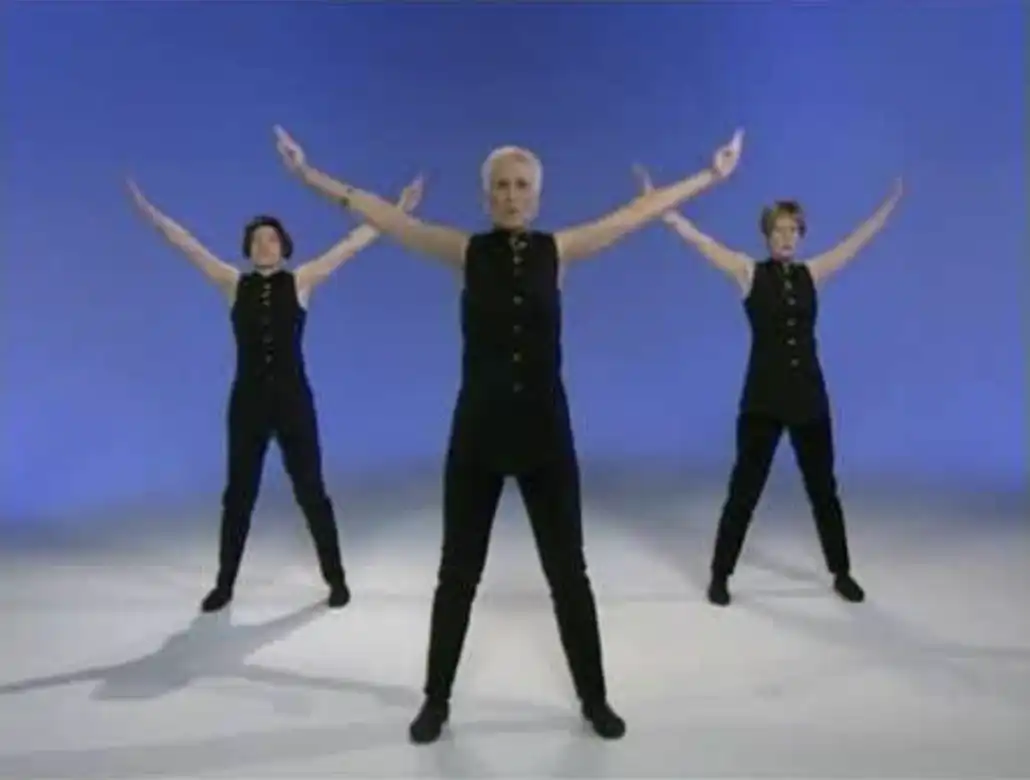
Castaneda integrated The Teachings of Don Juan, including psychedelic experiences and shamanism, with other methods he had purportedly derived from Precolombian societies in present-day Mexico. One such practice, which he coined “tensegrity”, was a physical exercise practice of tensing and relaxing the muscles and tendons of the body. According to Castaneda, Procolombian shamanic teachings conceptualized a dualism between one’s physical body as well as one’s “energy body,” essentially an energetic field with the potential to mirror or transform into the self. Specific movements would help preserve energy and aid in the transition between these two fields. Castaneda’s work as a philosopher purportedly started with learning the Tensegrity exercises from Don Juan, and he then borrowed the word from an architectural term relating to the arrangement of load and tension holding units in a system.
More information has surfaced about this secretive group since Castaneda’s death in 1997, but today, his following is widely considered to have been a cult. Several of Castaneda’s adoring followers went on to write books of their own on the subject of the shamanic rituals, and others unfortunately took their own lives under mysterious circumstances following his death. While some journalists and scholars are still deeply invested in finding out what happened, for now it’s safe to say that some things about it remain a mystery.
Final Thoughts on Carlos Castaneda
Thirty years since Castaneda’s death, his work continues to inspire those interested in the history of psychedelic research. Though his academic work was discredited and his personal life is marred by controversy, his writing has changed the world of psychedelic literature. Castaneda’s books, especially his original work, the Teachings of Don Juan, are definitely worth a read.