
The views and opinions expressed in this piece are solely those of the author, and are not representative of Inoculate the World as a company.
“Magic Mushroom” Edibles are Everywhere. What’s the Deal?
Six years ago, very few American psychedelic users had experienced the dream-like delirium of acute Amanita muscaria poisoning firsthand. Very few Americans had experienced the strange vibrations in the pit of the stomach, the sense of one’s body slowly melting and turning into gel, or the hours of nightmarish twitching and cold sweats that I experienced after eating the perfectly legal Blaze flavored mushroom gummies that I purchased from my local smoke shop.
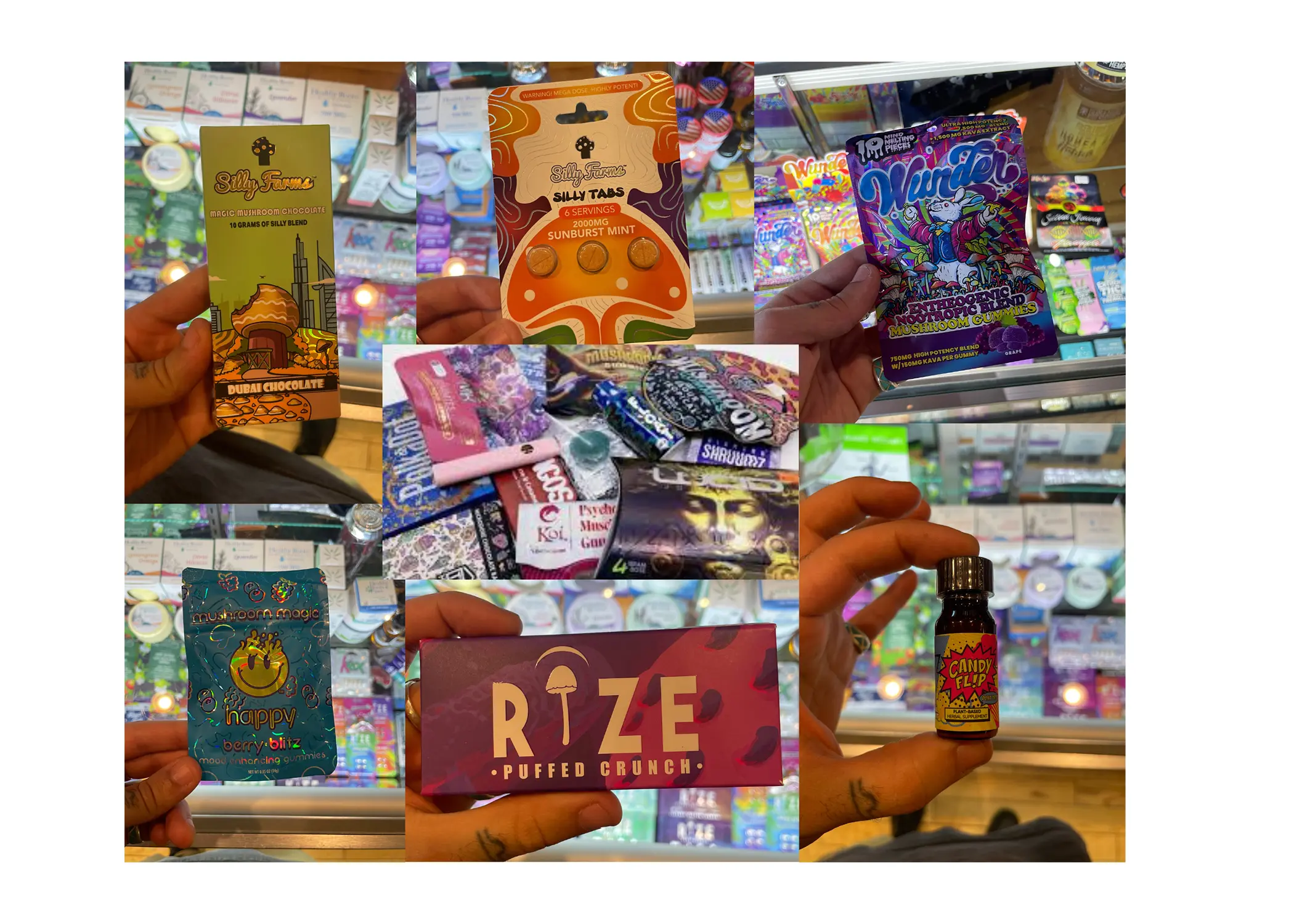
In 2025, Amanita muscaria mushrooms and their related alkaloids including muscimol were the third most widely used psychedelic drugs in America–more popular than magic mushrooms and ketamine, and more widespread than LSD. Statistically significant surges in previously unseen drug use like these are extremely rare, especially among users of psychedelics, a class of drugs that attracts a uniquely loyal user-base. As much as I’d love to believe that we’re living through a revival of Indo-European shamanism, this sudden uptick in usage of Amanita muscaria can be pinned on one thing, and one thing only: the equally sudden emergence of grey-market mushroom edibles that have appeared in gas stations and smoke shops around the country.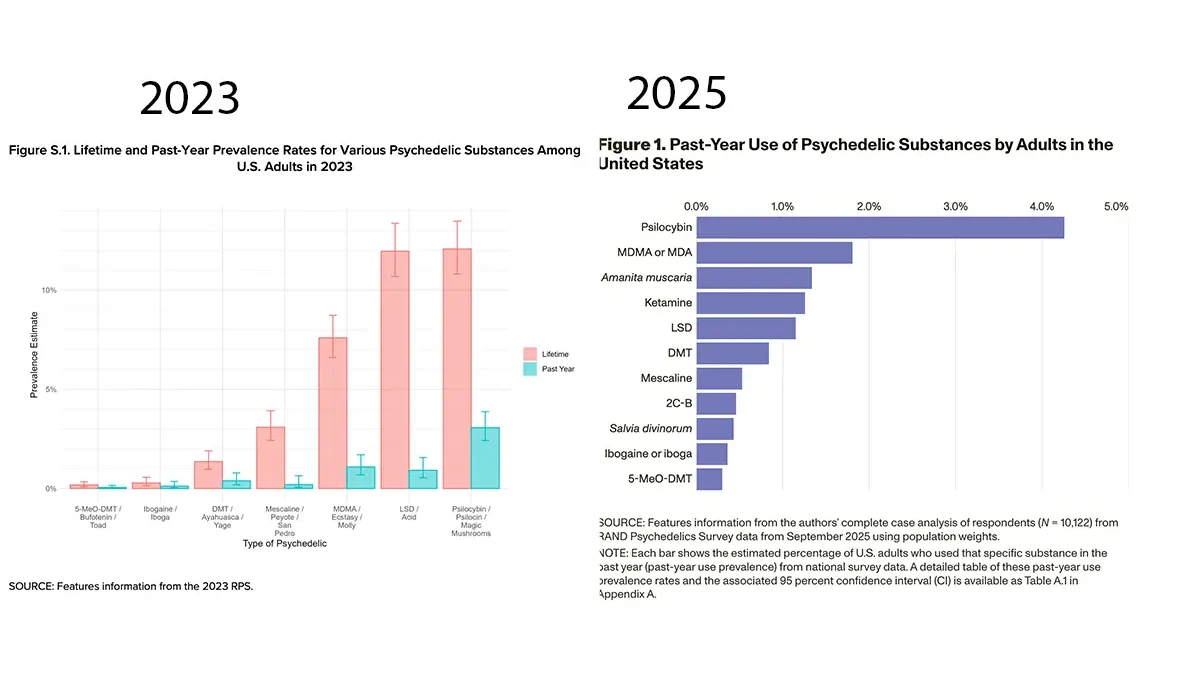
All of this is new, and none of it is by accident.
It’s difficult to write about new trends and emerging patterns in drug usage without lapsing into the sort of deeply ignorant hysteria and pearl-clutchy moralizing that plagues the majority of drug journalism. It’s similarly difficult to stare blankly at the absurdities of American drug policy without throwing one’s hands up and surrendering to the tidal wave of absurdity and self-contradicting anti-logic that one inevitably encounters.
I went into this piece expecting to write about Amanita muscaria and the implications of this unprecedented influx of users thereof that we’ve seen in the last few years. What I found instead was a whirlwind of shadowy business dealings, grey-market criminal enterprises, and deliberate deception that has led to catastrophic consequences for uncritical consumers whose only crime was their naivety.
Integrity at the Center
I’m immersed in the world of psychedelics, and if you’re reading this, you probably are too. I’ve read the books, purchased the tickets, and taken the rides myself more times than I can count. I’m convinced of their potential to transform consciousness, heal deep-seated spiritual wounds, and effect desperately needed change here on planet earth.
I’m likewise convinced of their relative safety, especially when measured against the ever-looming risk of physical harms like liver toxicity and fatal overdose that hangs over many non-psychedelic drugs. I know and believe these things, and you likely do too, but a psychedelic-naive person, or an already anti-drug person–someone who hasn’t immersed themselves in this world as much as we have–doesn’t know these things. The vast majority of Americans still, despite decades of advocacy work and education efforts, believe that psychedelics are dangerous, untrustworthy, and potentially life-threatening things.
This is why integrity is such a foundational guiding principle of what we do here at ITW. We’re on perpetually thin ice when it comes to the mainstreaming of psychedelics, and one false move could derail years of already tenuous progress.
Not everyone takes integrity as seriously as we do, however. It’s well established by now that predatory actors exist within the psychedelic space. Cynical opportunists, eager money-grabbers, and pseudo-shamans alike have flocked to this space, populated as it is by an overrepresentation of trusting, open minded, perhaps slightly naive people. Some see these people as easy marks. It is such people who are to blame for the sudden influx of unregulated and profoundly sketchy mushroom edibles that first hit the shelves of smoke shops and bodegas around 2024, landing increasing numbers of people on life support in hospitals around the country, and threatening to undo nearly a century of slow, easily-derailed progress.
This is the story of the grey-market mushroom edibles.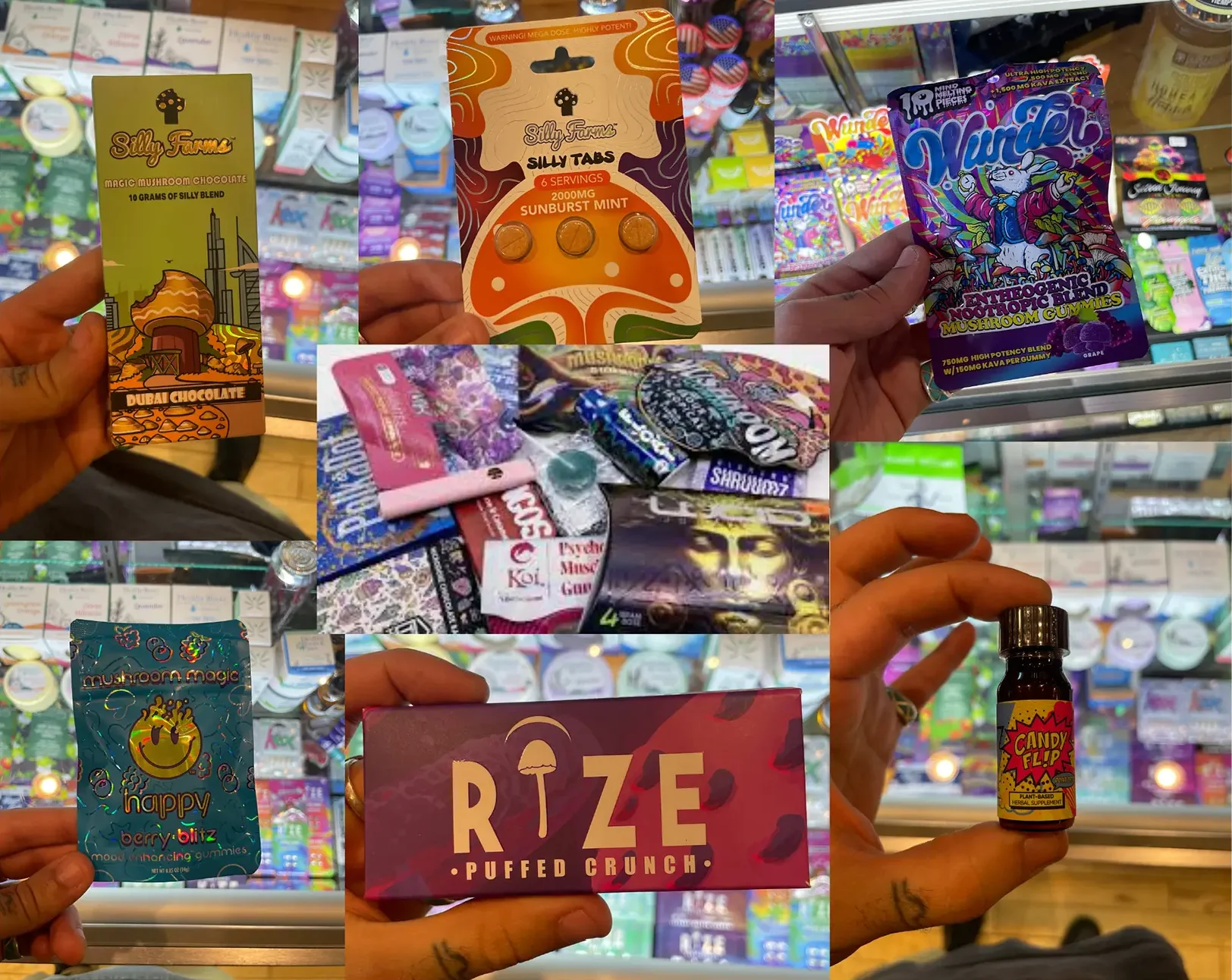
Amanitas vs. Psilocybes
Shrouded in folklore and mystique, Amanita muscaria are perhaps the most immediately recognizable of the wild active mushrooms, and yet prior to last year, their use among the general population wasn’t nearly as widespread as that of Psilocybe cubensis. This can be attributed in large part to the somewhat unpredictable and mostly undesirable effects that they induce at high doses: dream-like deliriums that can last for upwards of 7 hours, feverish sweats and chills, and so-called “lilliputian” hallucinations, where objects or people appear far smaller and then, in an instant, far bigger than they actually are.
All mushrooms are magic, but Amanitas’ magic doesn’t quite hit the same. The effects of A. muscaria are most directly attributable to two primary compounds: muscimol, and ibotenic acid, the latter being a highly psychoactive metabolic by-product of the former. While woefully under-researched and remarkable in their own right, it’s widely accepted that these compounds lack the visionary depth, the timeless insights, and the wide-spectrum mental health benefits of psilocybin.
Most mushroom-seekers, when given the option between the two, would choose Psilocybes over Amanitas any day of the week. Under prohibition, however, we are often deprived of the luxury to choose, and for reasons as bizarre and elusive as the mushrooms themselves, Amanita muscaria mushrooms are (mostly) legal, while psilocybin containing mushrooms remain (mostly) illegal. Over the last half-century, as magic mushrooms and their many promises have reached wider audiences than ever before, Amanita muscaria mushrooms and their related alkaloids have made an unexpected–and mostly unwelcome–reappearance on the scene in the form of widely unregulated gummies and chocolate bars, many of which are marketed simply as “magic mushroom products” and sold in gas stations and bodegas around the country.
Most casual consumers, when faced with a product claiming to contain “magic mushrooms” and a confusing legal landscape, would assume that the magic mushrooms in question are psilocybin mushrooms. Increasingly, as these mostly domestic-based grey-market companies spread their products like wildfire across the country, this assumption is becoming a distant memory.
Grey-Market Mushroom Products and the Absurdities of Drug Policy
Some of these products contain Amanita muscaria mushrooms and their related alkaloids, but according to data collected by researchers at Oregon State University College of Pharmacy, one is increasingly likely to find compounds like 4-AcO-DMT, 4-Ho-MET, 4-Ho-DET, 5MAPB, and N,N-DMPEA. If the mind-numbing absurdity of this situation isn’t already clear, allow me to spell it out plainly: it is perfectly legal to manufacture and sell a deceptively labeled “magic mushroom” chocolate bar that contains unknown doses of undisclosed, untested, and wholly unsafe research chemicals, while cultivating, wild harvesting, and possessing actual magic mushrooms (which humans have been using for millennia) remains a federal crime.
To understand how we got here, we must first briefly venture into the murky depths of American drug policy–an endlessly frustrating place where absurdity is the rule rather than the exception. In 1986, under notorious drug-hater Ronald Reagan, the US passed something called the Federal Analogue Act. The Federal Analogue Act encompasses a series of laws designed to close a loophole in the ineffective Controlled Substances Act of 1971. It allows prosecutors to treat a substance as Schedule One if it is “substantially similar” in chemical structure and effect to an already banned drug and is intended for human consumption.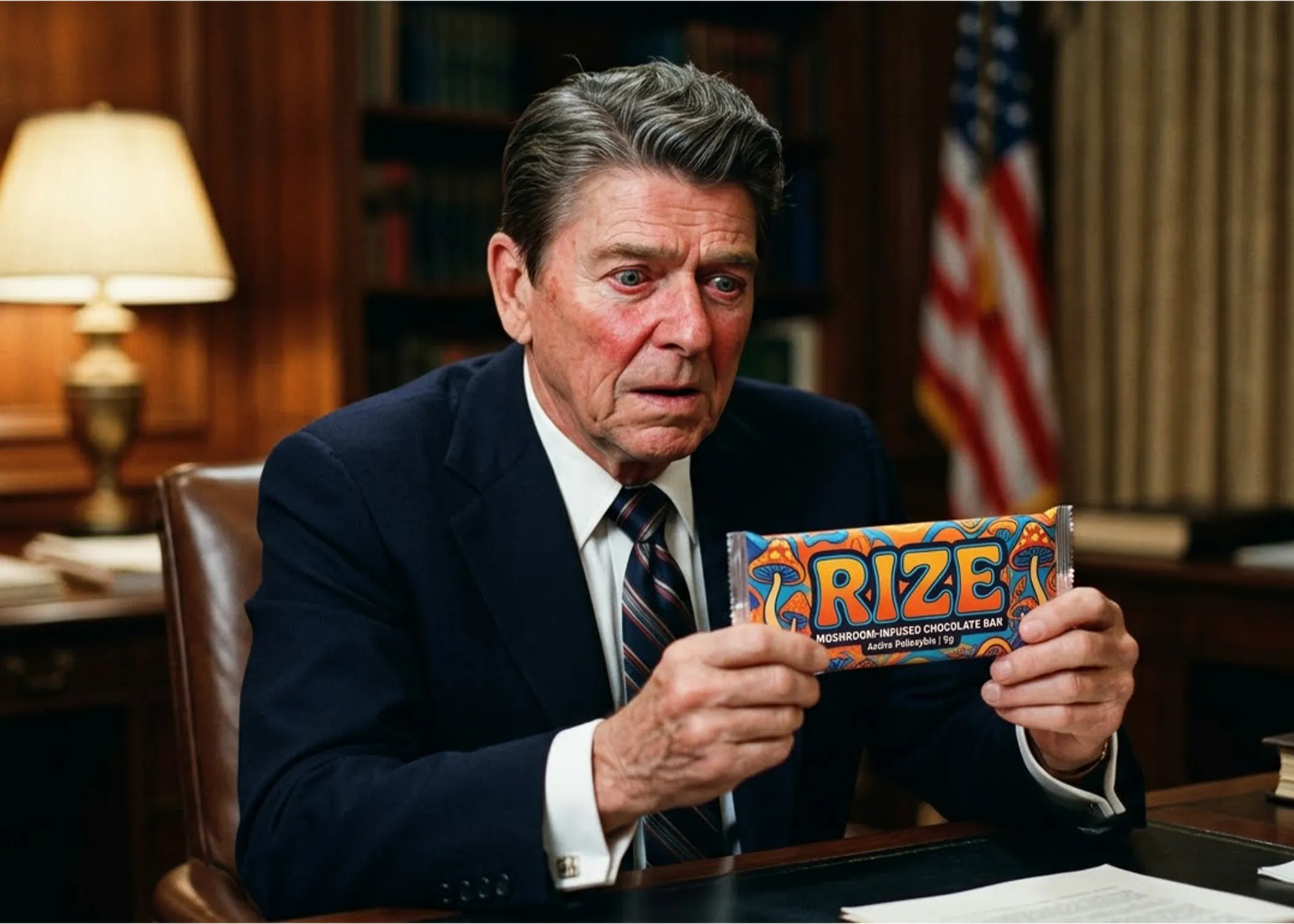
In theory, this gave the government flexibility to target underground chemists who tweaked molecular structures to skirt the law. In practice, it helped spark a designer drug arms race of sorts. Because the statute hinges on vague notions like similarity and intent, manufacturers of novel compounds began rapidly iterating new molecules that technically fell outside existing schedules. The result was a fast-moving grey market of “research chemicals” labeled not for human consumption but clearly marketed to consumers seeking psychoactive effects.
We’ve Seen This All Before: K2 and Spice and the Federal Analogue Act
This dynamic became highly visible in the early 2010s with synthetic cannabinoids like JWH-18 and CP-47 which were sprayed onto plant material and distributed through convenience stores and head shops as K2 and Spice. Cannabis-curious seekers who were unwilling or unable to source genuine bud would instead find themselves in possession of a shiny mylar bag covered in images of Scooby Doo falling down a wormhole or Lisa Simpson gauging her eyes out. Often branded as “herbal potpourri” and always labeled as “not intended for human consumption”, these products contained one of thousands of synthetic cannabinoids, some of which were nothing-burgers, and some of which were unfathomably potent.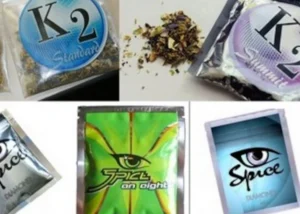
As regulators banned specific compounds, producers swapped in new ones, often with little toxicological data, creating waves of unpredictable and sometimes dangerous products. The Federal Analogue Act’s broad, frustratingly ambiguous language continues to shape this landscape: it deters the open commercialization of classic psychedelics while incentivizing potentially toxic novel alternatives that exist in a legal grey zone until lawmakers or regulators catch up.
In our present day, the most apparent instance of this disastrous failure in American drug policy has taken the form of these unregulated mushroom gummies and chocolate bars. This is an obvious response to the consumer demands of the era: magic mushrooms are having a moment, and everyone is trying to capitalize. Most of us who were alive at the time are too stoned to remember the proliferation of synthetic cannabinoids and their nightmarish side-effects, but it bears repeating that these grey-market mushroom edibles are essentially the same thing as the synthetic smoking blends of the previous decade, and should be regarded with as much hostility and suspicion–if not more.
Who Are These Products For?
Perhaps there’s a whiff of cynical social Darwinism at play here: if you’re gullible enough to buy a package of flavored Party Duck tablets (subheading: Get Duck’d Up!) from a smoke shop and eat them without consideration for what exactly you’re putting in your body, you deserve whatever unpredictable, potentially damaging experience you’re going to have. The reality is probably far less sinister: the manufacturers of these products may simply not care about your health, safety, or informed consent. Profit and virality are most likely their primary concerns.
The problem (one of many), and something that sets these products apart from the Spice and K2 of my youth, is that the branding on these things makes it abundantly obvious that the intended consumer base is children and teenagers. Much like with vapes, the sugary cereal flavorings and AI cartoon character branding on these seems to be aimed directly at a younger consumer base–the ideal market for a company trying to build brand loyalty and get someone hooked for life. Conservative-leaning anti-drug types, those prone to the very hysteria I’m trying (and perhaps failing) to avoid, have been cautioning us that they’re trying to drug the children, won’t somebody please think of the children! for decades now. It pains me to concede that, in this case, they just might be on to something.
Online communities have formed around these products–subreddits like r/mysterymagicmushrooms, wherein users compare their experiences and review various products. The tone of these posts ranges from enthusiastic endorsements of particular brands to foreboding warnings about others. Many users seem to be taking a sort of citizen science approach, using their own minds and bodies as testing grounds to try to discern the actual contents of these products. Interesting as this may be, I couldn’t help but feel sorry for the people in these forums. A simple demand for transparency and informed consent would answer all of their questions, but the companies behind these products would much rather prioritize their own profits.
Tracing the Source
Trying to track down what, exactly, is in these products is almost as difficult as trying to pin down who, exactly, is responsible for them. The whack-a-mole analogy gets a lot of airtime in discussions of grey-market drugs, and for good reason. It’s a constantly moving target, with new vendors popping up the second a legacy vendor is taken offline. In the interest of gathering as much real-world data as possible, I set out on a gonzo-inflected journey around my home city of Portland, Oregon in search of as many of these grey-market mushroom products as I could find.
I wish I could say that my journeys led me down obscure corridors and forgotten alleyways, but in reality I mostly found myself slipping into gas stations and smoke shops, many of which lay at the center of Portland’s “nicer” districts. I did my best to play the part of a naive, honest seeker who had heard such gosh-darn interesting things about these newfangled mushroom-thingies and just couldn’t wait to try them for myself. The staff, while always earnestly helpful, knew shockingly little about what exactly was in any of their products. They can be forgiven for this gap in knowledge given the fact that, in the absence of analytical testing instruments, it’s essentially impossible to figure out what’s in these things. 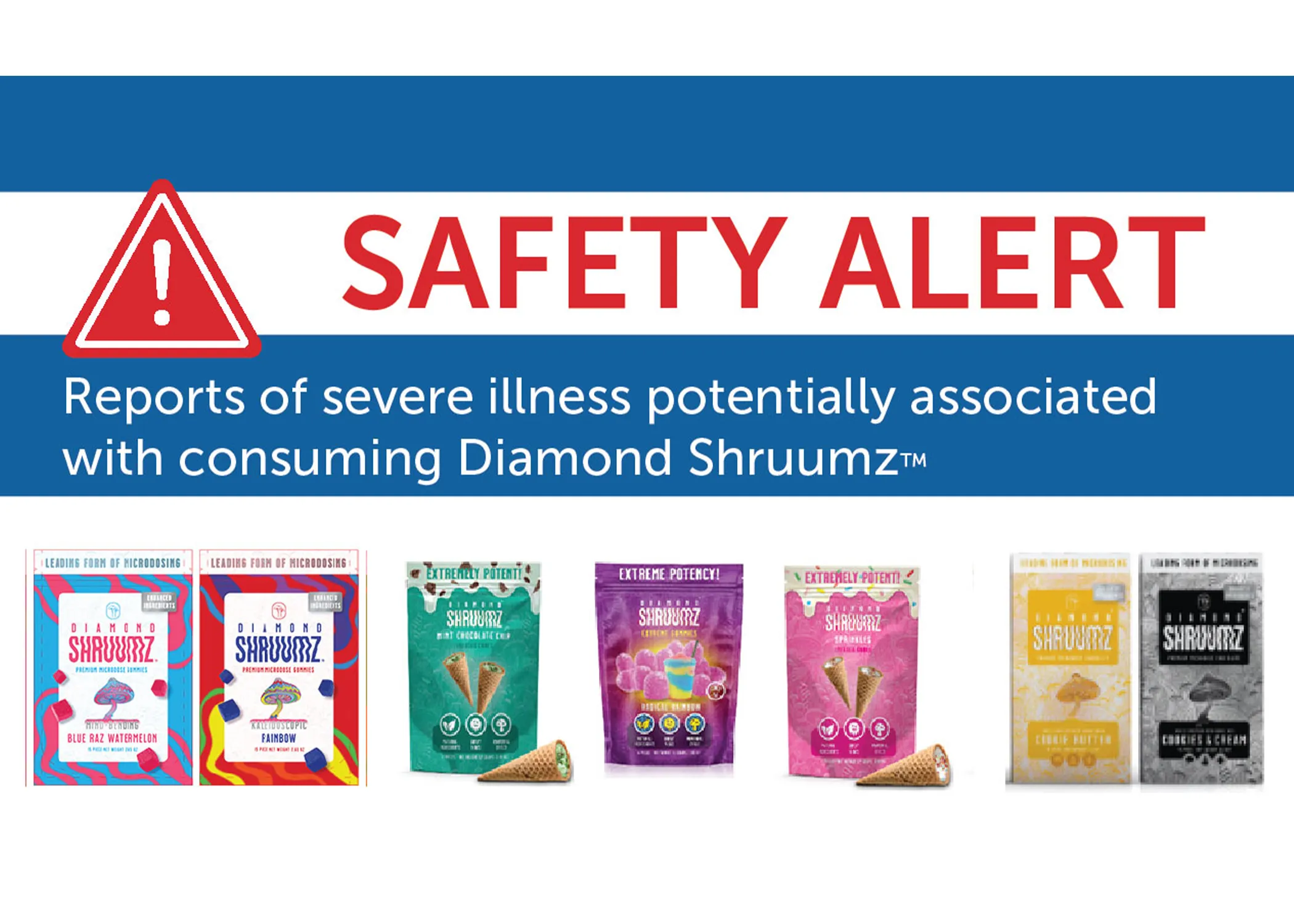
The products that I encountered included gummies, chocolate bars, Smarties-style tablets, shots, breath sprays, truffles, and honey sticks, unified only by the impossibly vague and deliberately misleading terminology that adorned their labels. Terms like “herbal nootropic blend” and “proprietary mushroom mixture” showed up on all of these, often right beside a QR code.
The COA Scam
A simple scan of the code would inevitably lead me to a very official-looking Certificate of Analysis (COA) slip, a report card of sorts that’s standard in the world of supplements and herbal medicine. COA slips are supposed to show you what’s in your supplements and at what concentrations so you can make an informed decision about what you’re putting in your body, but these companies and their COA’s only show what isn’t in their products. This is just one of many sneaky tactics that these companies use in order to project a false image of integrity. 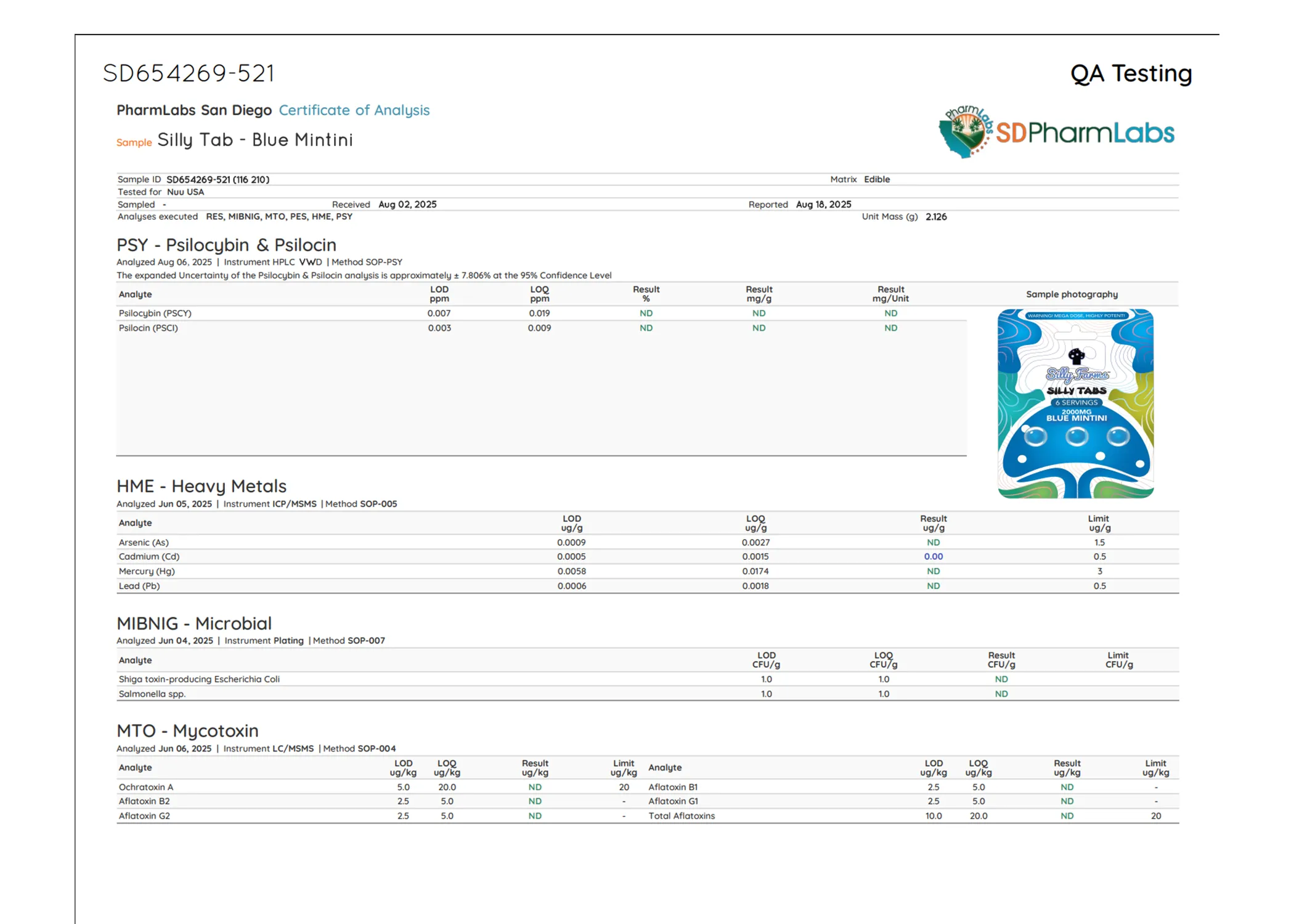
The average consumer won’t bother to go beyond seeing that a COA exists, which will provide them with just enough reassurance to view the product as legitimate. There’s a certain irony to the fact that many of these products try hard to reassure you, the user, that they don’t contain psilocybin, kratom, or any other recognizable drugs—as if these plants and fungi with thousands of years of recorded human use are somehow more dangerous than the unregulated research chemicals that are actually in these things.
The Struggle for Transparency
As a supplement to my undercover operations, I reached out to a number of online retailers in search of a contact, hoping to find a real person who might help me piece together a more humanized, less hostile narrative. As I’d suspected might happen, I was met with either radio silence or AI-generated, PR-heavy nonsense.
I reached out to the customer service line of one of these companies with an earnest inquiry about the contents of their products. In response, I received the following mind-numbingly unhelpful Chat-GPT slop:
[redacted] Gummies are completely legal and do not contain Psilocybin. Instead, they feature a carefully crafted blend of legal entheogenic compounds designed to provide a transformative experience without the need for restricted substances. Our proprietary blend of tryptamines is fully compliant with all legal requirements, allowing us to offer an innovative product that’s accessible to everyone.
For transparency, we don’t disclose the exact formula, but rest assured, every ingredient is selected for quality and efficacy. We’re confident you’ll love your [redacted] experience, and with our 15-Day money-back guarantee, your satisfaction is always our priority!
Language of transformation, transparency, and accessibility is utilized here to project a soft, humanitarian-hippie vibe and lull the potential user into a false sense of security. The simple fact is that most would-be customers would run screaming if they saw the full list of substituted cathinones, obscure phenethylamines, and Δ9THC-derivatives that are to blame for the psychoactive effects of these products.
The Hot Dog Analogy
A helpful analogy can be found in the realm of America’s favorite configuration of meat-in-a-tube: the hot dog. If we held food manufacturers to the same standard of transparency as we do drug manufacturers, every package of hot dogs would come labeled with a terrifying list of the real ingredients contained therein: obscure animal parts, synthetic food binders, and God-only-knows what else that would make the would-be customer recoil in disgust. If we operated under a sane food system, these products would, like K2 and Spice, be labeled as “not fit for human consumption”.
The difference is that the stakes, in the case of the hot dog, are relatively low. A single hot dog won’t do much damage (though repeated exposure is, of course, another story). The stakes are far, far higher when it comes to potent psychedelics like 4-Ho-MET: too much, and you’re looking at potential lifelong psychological harm. Add in the very high likelihood of unfavorable interactions with other drugs (pharmaceutical or otherwise), and you’re gambling with peoples’ lives. For my part, I’d rather not know what exactly is in my hot dog. It’s a gamble I’m willing to take for a fleeting moment of nostalgia-inflected joy at a ball game. The same simply can not be said for the psychedelics that I may or may not choose to put in my body.
A Moment of Compassion
Friend of the spores and king of the drug nerds Hamilton Morris put it best when he said the following in the introduction to an interview he conducted with Jordan Rubin about synthetic cannabinoids and the Federal Analogue Act:
“The circumstances that led to this industry ever existing in the first place are so stupid that it’s hard to even begin to decide whether what (the manufacturers of these products) do is ‘ethical’ or ‘unethical.’ ”
So stupid, so utterly contradictory and irrational are the inner workings of American drug policy, that as the last of the extremely unpleasant effects of the perfectly legal Blaze flavored mushroom gummies finally began to wear off, I couldn’t help but feel a wave of compassion for the people behind these bizarre products. They are cynical opportunists, yes, and it seems they couldn’t care less about honesty or integrity or informed consent, but they are mere symptoms of a much deeper problem.
Finding the Truth
I have the luxury of access to friends with fancy analytical chemistry tools and the wherewithal to know how to use them, and so after the awful hangover had worn off, I brought my Blaze gummies in for testing. They were found to contain muscimol, ibotenic acid, kava, and trace amounts of 4-AcO-DMT. None of these things are particularly dangerous in and of themselves, but the high concentration of active compounds mixed with the total lack of transparency regarding dosing makes this a decidedly dangerous product.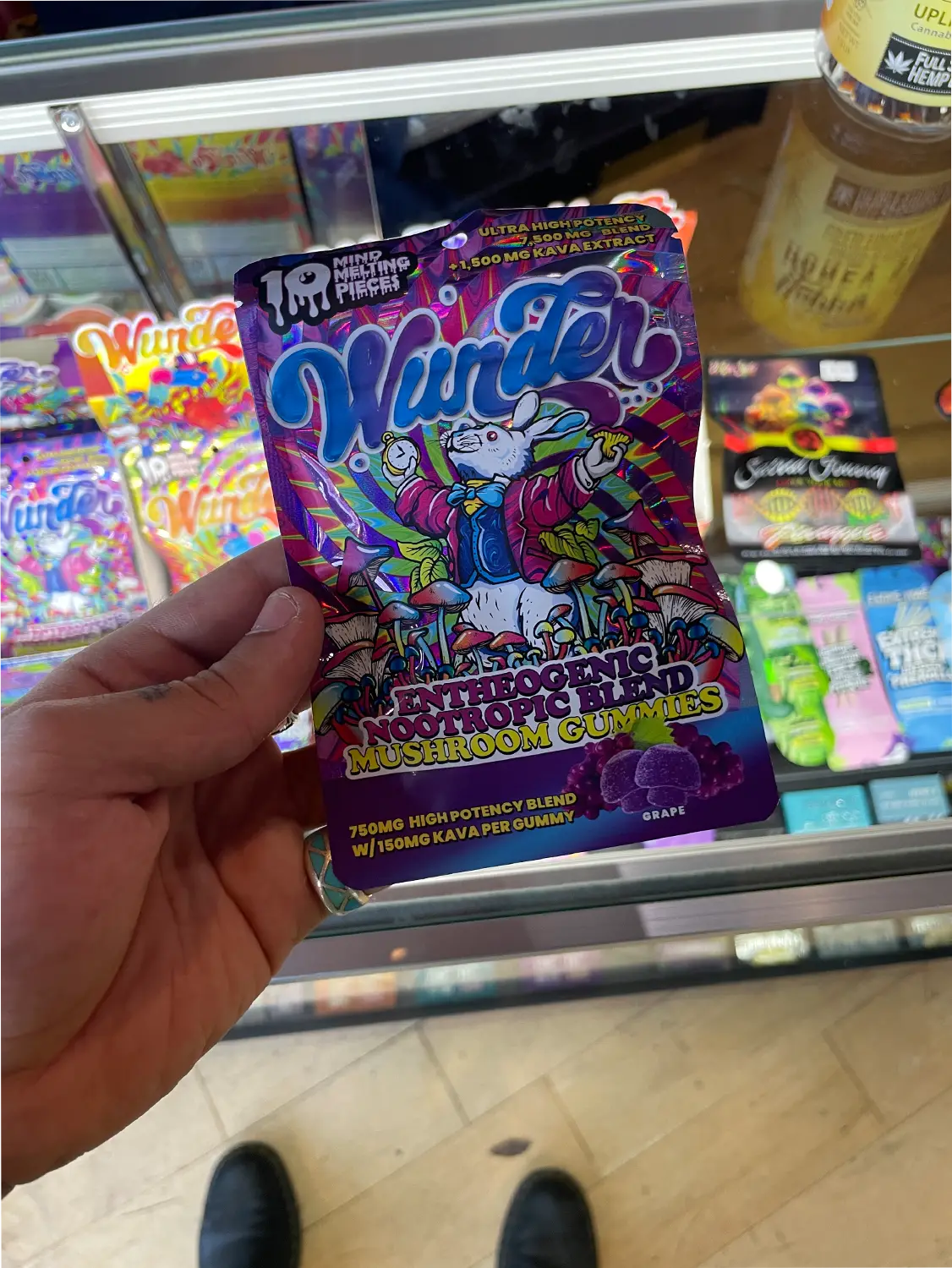
My Blaze experience was a wholly unpleasant and ineffective one, nothing like what a real, quality psychedelic experience feels like. I can say that with confidence because I’ve also had the luxury of traveling to places where the compounds that these imitators are trying to simulate–psilocybin, noble kava, ceremonially prepared and properly decarb’d Amanita muscaria–are legal. I know the difference, I know what they’re trying to simulate, and it pains me to imagine that, for ever-increasing numbers of Americans, these products might come to replace the real thing entirely. This is the fault of lawmakers, a culture that still views drug-taking as a trivial, unhealthy, and altogether bad thing, and a legal system that punishes people for following their natural curiosities. The manufacturers of these products can only be held accountable inasmuch as they’ve played by the hopelessly backwards rules of a hopelessly broken system.
A Simple Solution
Lucky for all of us, there is an elegant, foolproof way to circumvent all of this deception and predation and ensure that you know 100% of what you’re putting into your mind/body: in areas where it is legal, home cultivation of your own mushrooms may be by far your safest bet. If everyone who lived in a jurisdiction where such activities were legal were to wake up tomorrow and decide to grow their own mushrooms, these companies would disappear overnight.
Where Do We Go From Here?
The uncomfortable truth that this whole sordid episode forces us to reckon with is something most of us already know: prohibition doesn’t work. It doesn’t eliminate demand, but rather redirects it away from substances that are understood, documented, and relatively safe, and toward substances that are novel, untested, and occasionally catastrophic. The unstoppable force of the market meets the immovable object of prohibition, and what we get is an unregulated, unsafe market. When legitimate pathways to healing and transcendence are sealed off, illegitimate ones rush in to fill the void, and they do so with all the transparency and consumer protectiveness of a back-alley card game.
The Federal Analogue Act was supposed to be the thing that prevented precisely these situations. The idea, in theory, was simple: if underground chemists tried to skirt the Controlled Substances Act by tweaking a molecule here and there, prosecutors could still come after them by demonstrating that the new compound was “substantially similar” in structure and effect to something already banned. Close the loophole, stop the games.
What happened instead was the opposite. Rather than discouraging the development of novel psychoactive substances, the Act’s own ambiguity became a roadmap, and inaugurated a never-ending game of cat-and-mouse. Manufacturers learned that if you moved fast enough, if you kept iterating new molecules before regulators could catch up, you could stay perpetually ahead of the law. To say that the authors of this disastrous piece of legislation couldn’t see these dynamics on the horizon would be to give them far too much credit: the grey market was a feature of the Act, not a bug.
We watched this play out in real time with synthetic cannabinoids in the early 2010s. JWH-018, the compound at the heart of the first wave of K2 and Spice products, was developed by John William Huffman as a research tool for studying the endocannabinoid system–a bona fide “research chemical” if there ever was one. It was never intended to be smoked by bored teenagers in gas station parking lots. By the time the DEA emergency-scheduled it in 2011, manufacturers had already moved on to the next compound, and the one after that, and so on and so on. At the peak of the synthetic cannabinoid panic, the CDC was tracking hundreds of hospitalizations a month, and the products responsible were, technically, legal. The Federal Analogue Act was supposed to prevent this. It had been on the books for twenty-five years by then.
The Fight for Authenticity
Psilocybin mushrooms, which carry millennia of human use behind them and a rapidly expanding body of clinical research attesting to their safety, remain Schedule One controlled substances in most of the country. The gummies that are landing teenagers on life support, meanwhile, occupy a perfectly legal grey zone. A kid in a state where psilocybin is still illegal cannot walk into a dispensary and buy a carefully dosed, lab-tested product. They can walk into a bodega, though, and leave with a bag of cartoon-branded mystery gummies marketed with the strong implication that they contain the same stuff their favorite podcaster was raving about on the episode where he found God. The prohibition framework didn’t protect that kid. It just made sure the only option available to them was the worst one.
Oregon, where I live, voted in 2020 to legalize psilocybin therapy under Measure 109, and the first licensed service centers opened in 2023. It remains one of only two states, along with Colorado, to have created any kind of regulated pathway for psilocybin access. In both cases, the regulatory frameworks are expensive, limited in scope, and oriented almost entirely toward clinical or therapeutic settings rather than anything resembling open consumer access. The point isn’t that these efforts are worthless. They aren’t. The point is that, in the absence of something broader and more accessible, the grey market doesn’t wait around.
The answer to all of this, as it almost always is, starts with honesty, transparency, and a commitment to integrity. As people who care about the future of psychedelics, we must be vigilant and clear-headed, holding ourselves and one another to the highest possible standards. Grey-market operators will keep filling the void for as long as the void exists, and they will keep doing so with no interest whatsoever in the wellbeing of the people handing them money. You cannot regulate a market that doesn’t officially exist.
Until that changes, and it may be a long time coming, the best any of us can do is to educate ourselves, and to keep insisting on the kind of integrity and transparency that this industry is, by its very nature, incapable of providing. The people behind these products are counting on our continued ignorance and silence. They’re counting on our collective reluctance to draw attention to a space that is still, in the minds of a lot of Americans, presumed dangerous and guilty by default.
Changing this world for good begins with a single spore.