
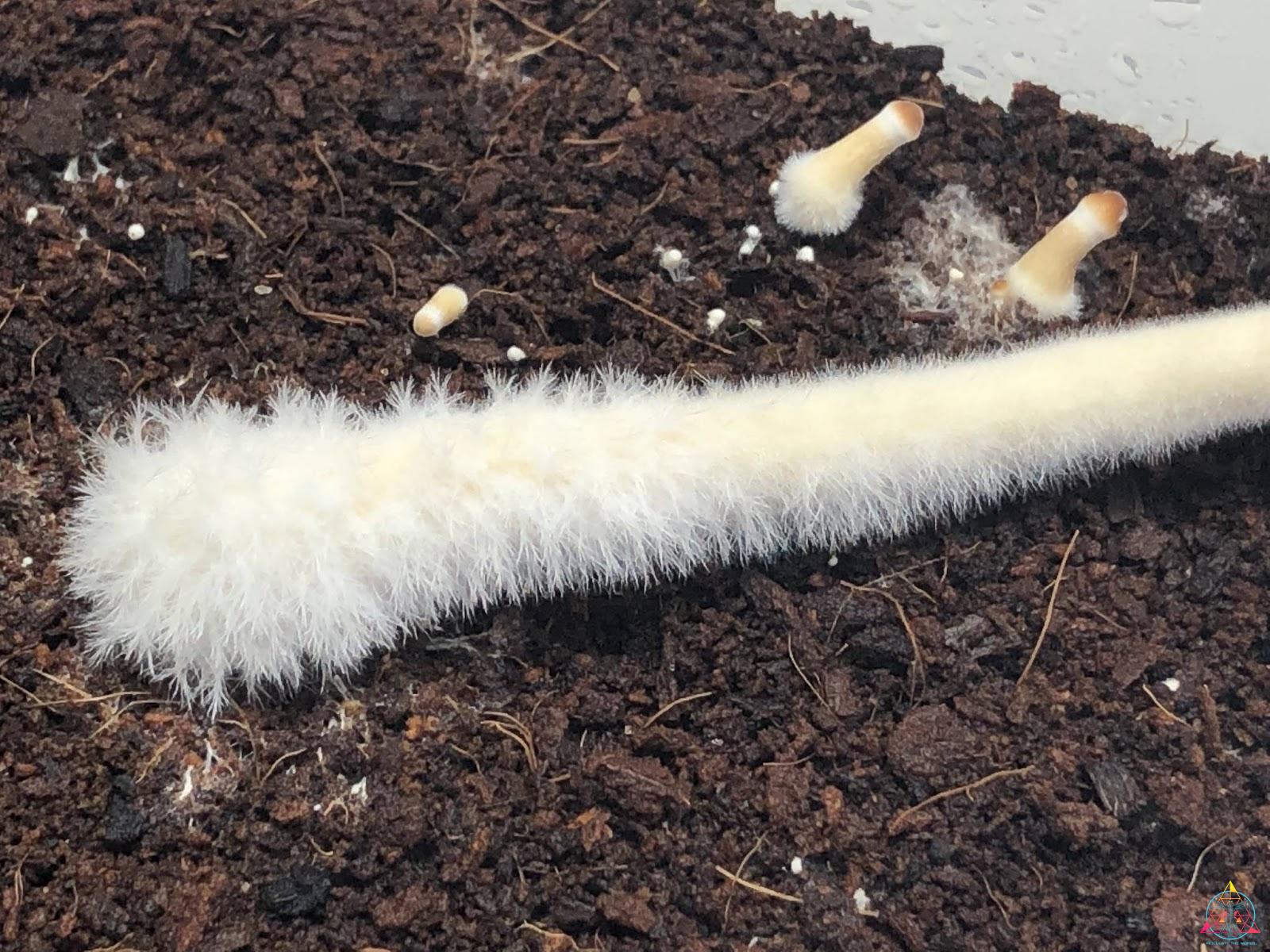
FUZZY FEET AND AERIAL MYCELIUM
If you’ve ever grown any species of fungus using mushroom spores or any other method, you’ve probably seen what’s called fuzzy feet. What appears to be a white fuzz at the base of the fruiting body are actually called aerial mycelium. This same aerial mycelium can grow all over the fruit, the cake, grain jars, and when stored damp conditions. Aerial mycelium forms in the presence of excess moisture typically in the form of a high Relative Humidity, the mycelium is trying to absorb as much water as it can. The organism is spending more energy not on fruiting, which is probably minuscule, but technically could be a reason to avoid it. The real reason to avoid fuzzy feet is poor FAE (fresh air exchange). Poor FAE can result in lower yield and a higher risk for contamination. If you have ever run into the issue, you’ll know it does nothing to the quality of the fruiting body and nothing to be overly concerned about, especially as a consumer. Hope this magic mushroom fact can help someone! Mush love❤️🍄