
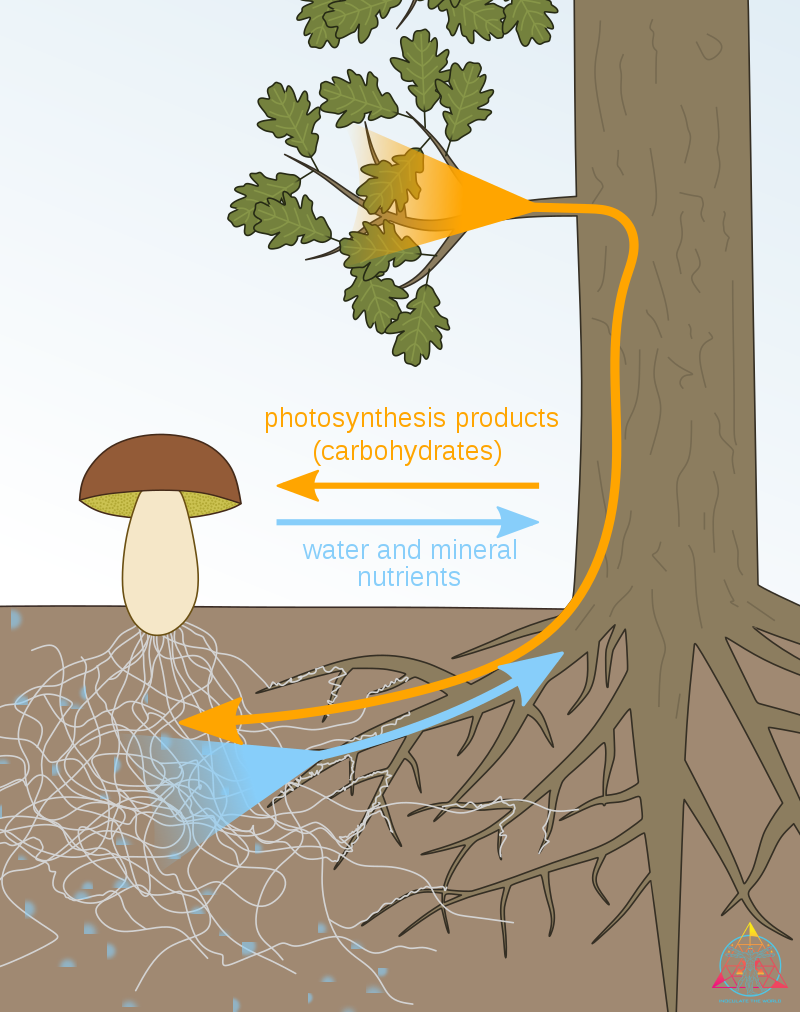
Mycorrhiza is a symbiotic relationship between plants and fungus, a relationship every single plant in nature relies on and benefits from. Mycorrhiza fungus, starting life as microscopic spores, is filament-like in structure, it can be thinner than hair or as thick as spaghetti, spanning several square millimeters in size to several square miles. Without these funguses most plants will not be able to take up water, phosphorus, iron, sulphur, and many other nutrients… No chance of survival. Without the plant most species of mycorrhiza would no longer be able to exist, as they no longer have the ability to produce sugars or perform respiration and break carbon out of its bonds for fixation.
Why would a species evolve not to be self sufficient? Because together they can thrive much longer and healthier lives in this symbiosis, they no longer have to devote the energy or genetic codes to make the things the other can provide. So why should this matter to you? If you’ve ever gardened, you’ll know that no-till gardens always outperform those that are tilled due to the breaking of hyphal connections. If you’ve ever grown greens in a pot you’ll know that they always perform better in the ground or with fungal additives directly to the roots. You’ll know that with the right nutrients outdoor gardens will always give you better yields, even if you had it under all synthetic lighting.
So when should you use a mycorrhiza additive? Whenever you are growing with non-myco-active or “sterile” soil. The extended answer is that the more species you can add the better. Every plant has developed its own network of species that it has co-evolved with, getting as many species of fungus or just the right combo could greatly improve the success of your plants. Any store bought myco-additive put directly onto the roots should work out great. The best place to start every time though is to just use living soil. There are several companies that have great products but starting your own compost and “culturing” your own little compost colony of fungus is the cheapest and most sustainable way to get your plants looking one hundred ten percent.
Taking a break from soils next posts but already have a couple started so dont be too sad. We will be getting dirty again soon 🙂