
Leopoldo Salazar Viniegra piloted one of the most forward thinking approaches to drug policy of the 21st century. In the 1930’s, he was one of Mexico’s leading psychiatrists and advocated a radical “social medicine” treatment approach. Alongside notable figures like Maria Sabina, Salazar was a significant thought leader in Mexico’s drug history. Sometimes dubbed the “Mexican Freud” and credited as one of the early adopters to what we now call “harm reduction.” Salazar has started to receive some of the attention he deserves in popular media, such as the 2021 podcast series, Toxicomania, and he’s gaining recognition as an important figure in the history of psychedelics and other drugs.
For a short while, Salazar’s radical proposals, like morphine dispensaries and a general humanizing approach to medicine, were ideas that politically divided post-revolutionary Mexico was ready to hear. Read on to learn about how Mexico came to adopt Salazar’s policy ideas, and how it all went wrong.
Early life and historical background
Salazar was born into a wealthy, well-educated family in 1898, under the authoritarian regime of Porfirio Díaz. He came of age during some of Mexico’s most tumultuous decades. Until Salazar was about ten years old, Diaz’s leadership had created an era of stability, and even prosperity in Mexico. Then in his early teens, a popular uprising against the aging Diaz ushered in a new status quo of political instability, punctuated by coups, armed insurrections of rivaling factions, US diplomatic intervention, and countless government turnovers. While the violent part of the revolution had officially ended by December of 1920, some historians argue that the revolution wasn’t really over until the 1930’s or even later, after the dust had settled.
During Salazar’s formative years, Mexico was a society deeply divided by race and class, grappling with big social questions about hierarchy, property ownership, and what it meant to be an upstanding citizen. Patriotism and revolutionary enthusiasm demanded a new kind of productive, upstanding community member.
Trends in drug use reflected the social hierarchies already present in Mexico. Many working people, especially in Indigenous communities, used and sold cannabis as an inexpensive traditional medicine. By the early 1900s, moral panics linked to race science and eugenics spread about violent Indigenous people using marijuana. Economic tensions between agrarian landowners and indigenous people throughout these revolutionary decades heightened the oppressions indigenous people were subjected to, and they became associated with violence and societal decay. A cultural image of Indigenous people smoking cannabis, becoming insane, morally corrupt, and killing with no remorse became the ultimate threat for the new national project in Mexico, and a justification for harsh punishments against Indigenous people and all drug users. These punishments were carceral rather than restorative or community based.
This was the rhetoric around cannabis in the public consciousness which Salazar was born into, and would one day push back on. It goes without saying that just like our era’s War On Drugs legislation, these policies were entirely based on stereotypes rather than evidence. Still, this carceral model prevailed in fields like psychiatry for far too long. Professionals in these fields didn’t provide any support for addiction, and instead believed in trying to criminalize any problem out of existence. These societal tensions, the lack of scientific rigor, and the effects of the carceral system, were sources of frustration for Salazar’s generation, who became inspired to create radical change in fields like social work and psychology.
The Crazy Years in Paris
Mexico underwent some chaotic years during Salazar’s early life, but by the early 1920’s he had completed the first step of his university education at the National Autonomous Unive

rsity of Mexico (UNAM) and went off to Europe to receive training in medicine and psychiatry. His education took him to Madrid and Paris, two cosmopolitan cities with their own unique drug cultures and bohemian scenes.
Paris has long been a site of exciting countercultural movements, but Paris’ post-World War 1 cultural explosion was something else entirely. During the earlier part of the interwar period, until 1929, Paris underwent what is often called “The crazy years” owing to the rapid proliferation of intellectual and art movements. Paris experienced urban expansion and a cultural renaissance, with an influx of intellectuals and artists from all over the world, a cohort called “the school of Paris.” Some of the most influential movements in the arts can be traced back to the school of Paris. Expressionists and cubists developed their style, alongside musicians like Josephine Baker who created Paris’ thriving jazz scene, and writers like Proust and Cocteau, who pushed boundaries and explored the unconscious through literature.
Thinking about his education in early 1920’s France, we can imagine that Salazar was involved in some serious debauchery. With all the post-war excitement, something special was in the air. That ‘something’ was mostly opium and hashish smoke. By the 19th century, psychoactive medications became commonplace and were increasingly used in individual homes. The policy in Paris could be compared to a decriminalization model, meaning there weren’t official regulations guiding the use or sale of drugs. Substances like morphine were easy to get from a pharmacist, and cannabis was commonly grown in individual households. Drug use wasn’t subject to the same regulations or stigmas we see today, and was merely treated as a harmless personal choice.
Substances like opium, hashish, absinthe, and ether were all commonplace among bohemians and artists, and contributed greatly to the creative process. The dreamlike and surreal qualities of so much modernist work often reflects the hazy atmosphere of an opium den, and the emphasis on themes like the unconscious arise from the various altered states that these bohemian spaces thrived on. Though not much is known about Salazar’s time in psychiatry school, I like to picture him mingling with Paris’ brightest creative minds and bohemian courtesans, enjoying all the delights this cosmopolitan city had to offer.
Salazar returns to Mexico city
In 1925, Salazar returned to Mexico City as a psychiatrist. Just five years earlier, President Venustiano Carranza had signed into law Mexico’s first anti-cannabis legislation. This national legislation had been brewing for decades, largely because of anti-indigenous stigma. Before 1920, drug legislation was left up to local districts, many of which had their own laws to crack down on cannabis. This new national approach signalled a greater investment in the stigmatized, carceral approach to drug use. Unsurprisingly, it was not actually effective at ending marijuana use.
With a new national carceral approach, the state set itself up against narcotics as well as racialized populations. By 1920, the target was not only indigenous people, but also the influx of Chinese immigrants who migrated to the country to work on Mexico’s railroad project and similar modernization efforts. Chinese immigrants became linked to opium addiction and trade. The anti-drug efforts turned racialized groups like Chinese immigrants into scapegoats for the nation’s problems, with an emphasis on jailing and punishing rather than trying to understand anything about their substance use or contributing social factors.
New trends in policy and psychiatry:
Growing into adulthood, many members of Salazar’s generation were disillusioned about the outcomes of the Mexican revolution. Compared to the generation before them, they were altogether more bohemian and countercultural, and more sympathetic to marginalized groups. Many even smoked cannabis themselves. As the effects of carceral systems put in place by various revolutionary administrations played out, it became clear that these approaches were harmful, and it was Salazar’s generation that set out to flip the script on addiction, mental illness, criminality, and punishment.
New trends in social science and psychology rejected carceral approaches in favor of a more humane approach, focused on treating mental health issues as illnesses rather than punishing them as crimes. This new approach, developed in the 1930’s, was called “social medicine” or “mental hygiene.” Social medicine encouraged clinicians to consider how social factors led to medical outcomes, urging them to reject the prejudice and stigma of their grandparents’ psychiatry by meeting clients where they were at. Psychiatry was at the forefront of the movement, and soon the Mexican League of Mental Hygiene, a professional organization focused on social medicine, dominated the national approach to mental health care.
Salazar rose the ranks as a psychiatrist, and became highly involved with Mexico’s mental hygiene movement, with a focus on addiction treatment. Salazar took a relaxed, even cavalier approach to patient care and drug use, from cannabis to opiates. He lived with his family in doctor’s quarters on the asylum at which he worked, allowing patients to play with his children, and even leave the asylum to buy cannabis. One can imagine that his unique background and travels, which exposed him to the positive side of psychoactive use, informed his treatment approach.
Salazar stood out because he rejected the doctor/patient hierarchy, imposing fewer rules on his patients, and actually treating them like people with agency, which was unheard of at the time. As he rose the ranks in psychiatry, he solidified himself as an eccentric but undeniably charismatic public figure. He wanted to prove that drug use, especially cannabis, wasn’t as serious or scary as some people imagined. He gave cigarettes to dignitaries, only to reveal later that they contained cannabis, all in the interest of proving that the plant was harmless wasn’t that big of a deal.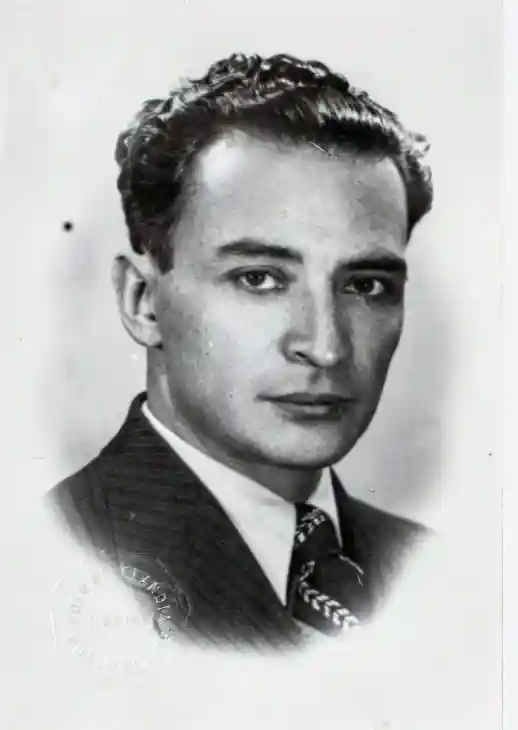
Salazar’s approach was not just a rethinking of individual treatment. In keeping with the mental hygiene movement, he argued that medicine cannot just be the treatment or punishment of one individual, but involves the restructuring of an ill society. In his professional opinion, treating drug addiction under the criminal model isn’t possible, and advocated for decriminalization along other social projects. In 1934, Salazar’s radical approach to psychiatry found political companionship with the newly elected president Lázaro Cárdenas. The Cárdenas administration had ties to Leon Trotsky and labor movements, created systems for communal land ownership, and nationalized Mexico’s oil industry. He supported Salazar’s radical proposals for the betterment of society through drug policy.
Salazar’s Myth of Marijuana
Salazar conducted thorough experiments on the effects of cannabis– some of the first of their kind to do long, detailed analyses of the drug. Changing the narrative about cannabis became his pet issue and he even wrote a comedy screenplay about marijuana’s harmless effects to try to sway public perception. In 1938, his magnum opus, El mito de la marihuana (The Myth of Marijuana), which dispelled some of the most pervasive and troublesome cultural ideas about cannabis, was published in Criminalia, a sociology journal.
Contrary to common perceptions at the time, Salazar found that cannabis had few physical effects. His article showed that many of the most damaging myths about marijuana, such as anecdotes about violent crime, schizophrenia or insanity were simply false. In other cases, Salazar argued, preconceived notions about what to expect would greatly impact a user’s experience and actions when trying a drug. In other words, Salazar posited that legitimate cases of ‘reefer madness’ or similar violent outbursts among cannabis users were actually the result of expectations and social constructs around the drug, rather than any chemical or neurological output.
Scholars familiar with Salazar’s work observe parallels with Timothy Leary’s “set and setting”. Decades before Leary popularized the phrase to explain how one’s physical and cultural environment and mindset can shape a psychoactive experience, Salazar was arguing that expectations and cultural narratives play just as great a role as the substances themselves. While Leary argues that the individual has the power to alter a drug experience, Salazar posits that one’s experience is already determined by their cultural environment.
A radical approach to drug policy
Salazar argued that addiction should be treated as a disease and a symptom of larger social problems rather than a crime. His approach was not just based on compassion, but in the conviction that mental problems like addiction were socially and environmentally determined. As such, the real solution to addiction would ultimately be a radical restructuring of society; the abolition of money and class society would be the only way to truly free people from mental problems. He also believed in the complete legalization of drugs, and formulated a program for the government distribution to upend the black market drug trade. The history of Salazar’s programs and the literature that informed them show us that ideas like psilocybin legalization, decriminalization, and similar efforts, are by no means radical or new ideas.
Legalizing drugs and controlled distribution programs may seem counterintuitive, but drug prohibition is at the root of many social problems we typically attribute to drug use. Alternatives to prohibition end up being healthier for society in the long run. Unsafe, unstandardized drugs can cause overdoses, and a lack of safe supplies can cause hygiene and safety issues. Drug prohibition creates the conditions for predatory pricing, leading addicts to commit crimes just to pay for their addiction. While we can moralize all we want about ‘the consequences of personal choices’, or ‘enabling bad behavior’ the practical solution really is to disrupt this corrupt market at the root.
In 1940, Salazar’s plan was implemented, and the government opened a pilot project: a single dispensary clinic to provide safe, low cost drugs, primarily morphine, for addicts on the condition that they accepted medical advice at the clinics. Under Salazar’s advice, the sale and purchase of small amounts of drugs was decriminalized and focus shifted toward providing medical care and social services for people struggling with addiction. Some estimates suggest that this clinic served around 500 patients per day.
In contemporary language, we might call this strategy a form of harm reduction. Individuals formerly crippled by their addiction could work toward a stable life because they were no longer being fleeced by predatory drug dealers, or facing medical problems from unsafe drug use or lack of healthcare. A little stability creates a feedback loop that continues into other areas of their life, improving a person’s overall wellbeing, and if they want, potentially reducing their dependence on a drug.
While Salazar’s program helped patients, his broader strategy was to out-compete the black market. When addicts had a safer, cheaper source for drugs, they were no longer dependent on the illegal drug trade. With less cash flow coming in, the illegal drug trade was significantly weakened both financially and as a social force. Mexico started to see an end in sight for the police corruption, crime, and downstream economic effects of the illegal drug industry that impacted everyone’s lives.
Although Salazar’s strategy worked and was generally popular, it had its dissidents. People don’t always like to see drug use in their communities, and because Salazar’s clinics made drug use more visible, people opposed them. Still, we know that higher visibility doesn’t really correlate with the raw numbers for statistics like overdoses, or even overall drug use. It’s remarkable that close to a century later, we still see the same debates with NIMBYism in our discussions about projects like addictions treatment and social housing. Even people who understand the data and recognize the benefits grow uneasy when they see it in their own communities.
The end of an era: the discrediting of Salazar.
Despite ongoing debates about Salazar’s program, it was a huge success and was even set to be expanded and scaled up. Then, US-Mexico relations destroyed everything, and sent Mexico’s drug problem spiraling worse than ever before.
Mexico’s ambitious morphine distribution project relied on drugs produced in the United States. When the US halted the distribution of morphine to Mexico, the program could no longer continue. While some US officials stated that World War II-induced resource constraints made it untenable to continue morphine exports, the US was already looking for a reason to shut the program down. The US claimed the responsibility to ensure that their morphine was being distributed for legitimate medical or scientific uses, and reserved the right to revoke distribution for purposes they deemed unfit. The US, which adhered to a strictly prohibitionist model for drugs, disapproved of Mexico’s model and imposed economic warfare on Mexico ceasing all exports of drugs like morphine and cocaine, which quickly impacted hospitals around the country. This forced Mexico to adopt a more predictable prohibitionist approach to drugs so avoid further sanctions from the United States.
Salazar, who had become an eminent international voice for the position of harm reduction and decriminalization, became discredited as his project crumbled. His very public discrediting was also the work on the United States. Salazar had been invited to speak at the League of Nations Opium Advisory Committee but ended up not speaking and mysteriously left his position as the chief of Oficina de Toxicomanías y Alcoholismo (Office of Drug Addiction and Alcoholism) after meeting with US officials.
This new shift in US-Mexico relations and drug policy contributed to the narco-trafficking system we see in Mexico today. Benjamin T. Smith’s The Dope connects the end of Salazar’s program with the beginning of highly professionalized, organized drug trade wherein military, police, and state officials colluded on a large scale. Before the 1930’s, Mexico’s decentralized drug regulations led to disorganized black market activity. While still corrupt, it was nothing close to the militarized trafficking models we see today. Once Salazar’s program was shuttered, the demand for narcotics remained, but the supply was forced completely underground, and the police and military began working with traffickers in a series of complex bribes and political corruption schemes, the predecessor of today’s narco trafficking conflicts.
Salazar’s final years, and where to go from here.
Though his days as a high-ranking government psychiatrist were over, Salazar continued to do meaningful work, serving as the director of La Castañeda asylum, then studying mental illnesses among troubled youth at a youth center called “house without bars.” Conflicting reports suggest he died either by suicide or from stomach ulcers in 1957.
Today, Salazar is remembered as one of the champions of harm reduction. It can be discouraging to think about how little has changed almost a century later, but this story should not just serve as a pessimistic lesson about the role of international manipulation in drug policy. In a world where fear and stigma are battling for our attention, Salazar’s legacy can remind us to focus on evidence and compassion. This lesson is especially relevant in fields like social services and medicine, but also for how we show up for our neighbors and communities.